
PPWR – Packaging and Packaging Waste Regulation.
PPWR is a major new set of rules from the European Union designed to tackle the massive, growing mountain of waste generated by packaging.
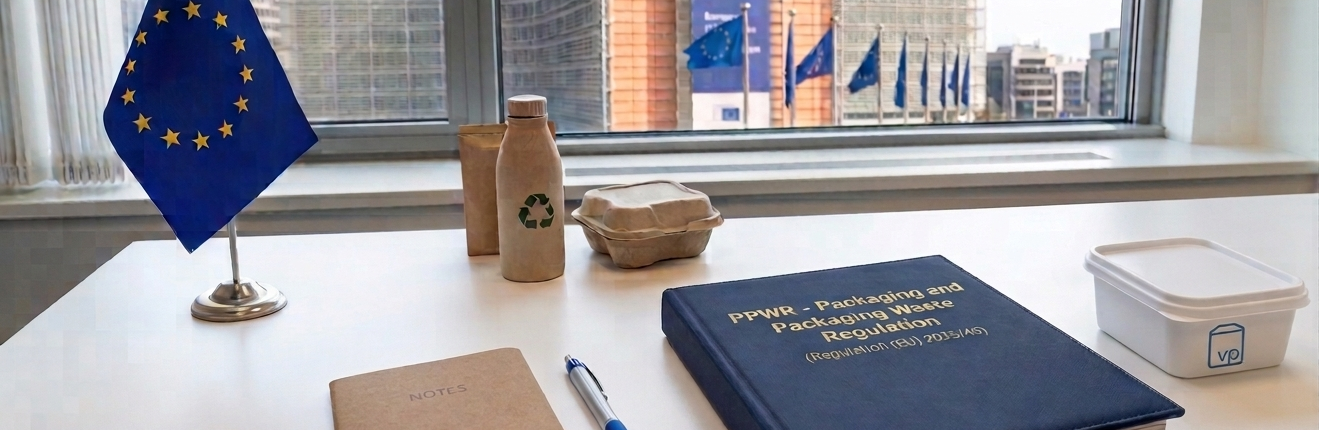
Instead of asking 27 different countries to come up with their own rules, the EU is making a single, binding law for everyone. The PPWR entered into force in early 2025 and officially becomes enforceable (the general application date) on August 12, 2026.
If you don’t run a manufacturing company that exports to Europe, you don’t need to worry about the legal paperwork. But you will notice a big shift in your everyday life as a consumer.
Here is what PPWR means in plain English:
1. The End of “Tiny Plastics”
The regulation bans several types of unnecessary, single-use plastic packaging. Starting on 1st January 2030, you can say goodbye to:
-
Miniature shampoo and lotion bottles in hotel bathrooms.
-
Single-serving ketchup, mayo, and sauce packets at restaurants.
-
Very Lightweight Plastic Carrier Bags (VLPCB) used for small amounts of fresh fruit and vegetables.
2. Less “Air” in Your Deliveries
Have you ever ordered a small item online, only for it to arrive in a massive cardboard box filled with plastic bubbles and empty space? The PPWR puts a stop to that. E-commerce companies and transport packaging will be legally required to ensure that packaging does not contain more than 50% empty space.
3. Safer Food Wrappers
Many fast-food wrappers, microwave popcorn bags, and pizza boxes are coated with PFAS (often called “forever chemicals”) to keep grease from soaking through. These chemicals take incredibly long to break down in nature and can build up in our bodies. The PPWR strictly limits these chemicals in food packaging starting 12th August 2026.
4. Easier to Understand Recycling Labels
Right now, figuring out which bin a piece of plastic goes into can feel like a guessing game. The PPWR introduces harmonized labels across the entire EU. Every piece of packaging will have a clear, standardized symbol that matches the symbol on your local recycling bins, telling you exactly how to dispose of it.
5. Everything Must Be Recyclable
By the year 2030, virtually all packaging placed on the EU market must be designed so that it can be recycled.
By 2035, it must be recycled at scale—meaning the infrastructure has to actually exist to process it, rather than it just being “theoretically” recyclable. You will also start seeing a lot more options for reusable and refillable containers for things like takeaway coffee or cold drinks.
In short: Less unnecessary plastic, safer food wrappers, smaller delivery boxes, and a recycling system that actually makes sense.
PPWR applies to all packaging materials

While a lot of the headlines focus on plastic, the PPWR applies to all packaging materials placed on the European market, including paper, cardboard, wood, metal, glass, and composite materials.
Here is how the new rules specifically target cardboard and wood:
Cardboard Boxes
Even though cardboard is already widely recycled, the EU wants to stop companies from wasting material and shipping air.
-
The 50% Empty Space Rule: The rule stating that packages cannot contain more than 50% empty space is specifically targeting cardboard e-commerce and transport packaging. You will start seeing much smaller, “right-sized” boxes.
-
100% Recyclable Design: By 2030, all cardboard boxes must be designed for full recyclability at scale.
-
Note: Because cardboard is so effectively recycled, standard cardboard boxes are actually exempt from the strict reuse targets mentioned, as long as they meet the recycling criteria.
Wooden Pallets
Wooden pallets are classified as “transport packaging” and face major structural changes.
-
The End of Single-Use Wood: The common practice of shipping goods on cheap wooden pallets and discarding them after one trip will no longer be allowed.
-
Mandatory Pooling and Reuse: The PPWR sets strict targets for transport packaging. By 2030, at least 40% of pallets used by an operator must be reusable and part of an established “pooling” or return system. By 2040, this target jumps to 70%.
In short, if a material is used to hold, protect, or transport a product, it falls under the PPWR—whether it is a tiny plastic ketchup packet or a massive wooden shipping pallet.
PPWR Roles and Obligations
There are three roles within PPWR
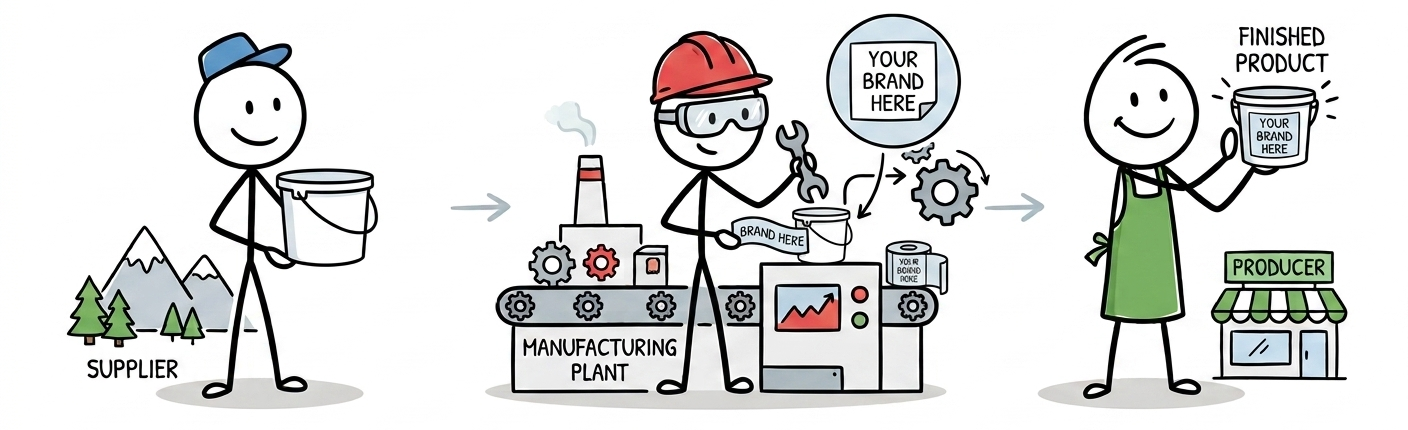
SUPPLIER – makes the physical packaging materials
MANUFACTURER – brands the packaging and guarantees it meets all design laws
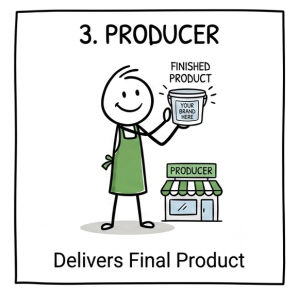
PRODUCER – places packaging or packaged products on the market for the first time
 Supplier
 Supplier
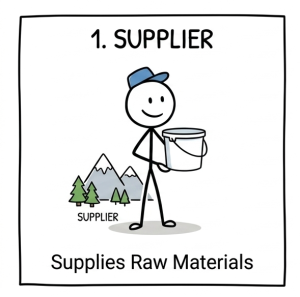
The company that makes or provides packaging materials to another company, but does not put their own brand on it.
-
Example: A factory that produces plain white buckets and sells them to a food production company.
-
Obligations: Suppliers do not hold direct compliance or financial responsibilities for placing the packaging on the market. However, under Article 16, they have a strict information obligation. They must provide the manufacturer with all the necessary technical data—such as material composition, recycled content, and chemical safety—so the manufacturer can prove the packaging is legal.
Manufacturer
 Manufacturer
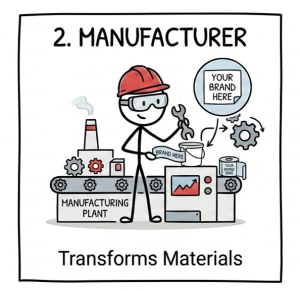
Designs and produces the physical packaging format to ensure legal conformity (Design for Recycling, PFAS limits, empty space rules)
It does not matter if a third-party factory physically produced the box; if your logo is on it, you are legally the manufacturer. The European Commission has clarified that, for sales packaging, the manufacturer will normally be the filler or the brand owner.
-
Example: If a supermarket has a contract factory produce and pack private-label pasta, the supermarket is the manufacturer.
-
Obligations: Manufacturers hold the heaviest design and documentation burdens under the PPWR. They are responsible for:
-
Ensuring the packaging meets all recyclability and material reduction standards.
-
Compiling the full Technical Documentation file for every packaging type.
-
Signing the legally binding EU Declaration of Conformity (DoC) before the packaging hits the market.
-
Producer
 Producer
The party responsible for Extended Producer Responsibility (EPR), including registration, reporting, and financing the collection and treatment of packaging waste.
The PPWR defines the Producer as the company that first makes the packaging available in a specific EU Member State. This means the identity of the producer changes every time the product crosses a national border.
-
Example: If a French company manufactures a branded product and sells it in France, they are the Producer in France. But if they sell that same product to a distributor in Germany, the German distributor becomes the Producer in Germany because they are the first to introduce it to the German market.
-
Obligations: Producers fall under the Extended Producer Responsibility (EPR) framework. They must:
-
Register with the national authorities in every single member state where they are the first to place the packaging on the market.
-
Pay the EPR “green fees” to fund the collection, sorting, and recycling of that packaging waste in that specific country.
-

